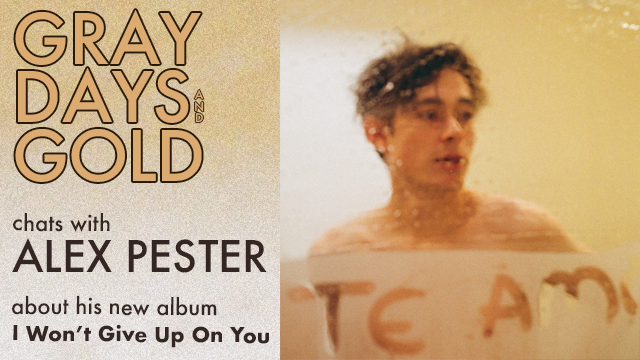
My enthusiasm for the work of singer-songwriter Alex Pester, based in Bath, UK, is such that back in 2020 he was the first artist I ever reached out to for an interview—and now, on the occasion of his newest album, he’s the first I’ve interviewed via video! June 14, 2024 will see the release of his fifth album under his own name, titled I Won’t Give Up On You, perhaps his most direct and emotionally resonant record yet, and he joined me—fresh off of an eight-hour shift at a bakery, lest anyone forget that few musicians make a living from their art alone—to talk about his life and work. You can watch the video via the embedded player, or read the full transcript below.
You can find I Won’t Give Up on You on Bandcamp, Spotify and other streaming services, and follow Alex on Instagram @alex.pester. You can also read our previous interviews from April 2020 and October 2021.
Hi, everyone. My name is Mark Griffin, and I’m the host of a streaming music show called Gray Days and Gold, in which I try to find and highlight extraordinary songwriters and musicians who aren’t necessarily receiving the attention they deserve. Back in April 2020, only a few months into my show’s existence, I stumbled across the music of Alex Pester, who at the age of 19, had just released what I thought was his debut album. Little did I know that earlier in his teens and under a different name, Alex had already self-recorded and released over a dozen album length collections, somewhere in the vicinity of 150 songs, onto Bandcamp. June 14th will see the release of his fifth album under his own name, titled I Won’t Give Up On You, and he joins me from his home to talk about his work. Alex, it’s a pleasure to have you here.
Alex Pester: Oh, it’s always wonderful to be here. But also there in front of all of you people.
Am I correct in thinking that you’re joining me from Bath, UK?
Yeah. I’m in… I’m quite high up. I’m on the third floor of a very old building in Bath. My girlfriend is next to me. It’s nice.
And just to orient anyone who might be discovering you for the first time, I would like to cover some background first. When would you say your love of music really blossomed into being?
I was raised in a really musical household. I think my love of music, the most important aspect of that, really, in my personal development, was when I started self-recording. And so that would have been around, like 2014. Christmas 2014, I got a a red, sort of diddy electric guitar. I got an iRig, which is like this kind of tiny, little portable interface where you can put your jack lead straight in there and record through USB into your, into your laptop. And it’s the same laptop that I’m conducting this interview with now. I’m remarkably cheap. I don’t really invest in gear very much. I tend to have people offload gear on me.
But, yeah, that was sort of where it, where it started. Just sort of playing around with very simple DAWs, digital audio workstations, and realizing the possibilities there. I graduated to Logic in about 2017 when my dad started to believe that what I was doing was worth investing a bit more money in, and it was shifting towards me taking that as my career path. Because I did my GCSEs in 2017, so it was a bit of a turning point there.
Going to uni, really. That’s the big change. I was suddenly around string players and, you know, young people with ideas. And I grew up in a very like quite a large town for the southwest of England, but very much a place where people live once they’ve kind of done what they want to do in life and they’re settled. So if you’re a young person going to the city, it’s like, wah! Even Bath, which is comparatively very, very small.
I read in a previous interview with you that one of your big musical awakenings happened somewhere around the age of ten, when your brother gave you an iPod loaded with Beatles. And every time that I’ve heard you talk about your musical influences, you rarely mention anything contemporary. It always seems to be music from the late 60s, early 70s—and not just that era, but more sort of singer-songwriter, English folk tradition music. And I’m really curious where that influence came from. Was that the predominant music that was being played in the household when you were growing up?
In the household, it was… The first album I really got into was a compilation of 90s dance music called Dance Massive 2 which included such hits as “Exterminate” by Snap. That was actually the music I listened to when I was a real, like, a little kid. And then when my brother gave me that iPod and it was my Welsh year six residential. I went to this farm in, in South Wales and learned how to milk goats, I guess, and fell in love with the Beatles. I think I got my first crush on a girl then as well. So I think things like, “I Feel Fine” and “Eight Days a Week”, it kind of oof, you know, amazing stuff. Really kind of hits you in a very direct way, especially when you’re that young.
The, the British folk influence really was kind of, the only person I could think in my family who would have inspired me more towards that direction would have been my uncle, my uncle Nik. He’s got an amazing record collection. And he had, you know, nothing crazy, but he had, like, sort of Love, Forever Changes, so there’s a folk rock thing. And, in the British stuff he had, like, Van Morrison, Moondance, Astral Weeks, those sort of records, really. Joni Mitchell. Yeah, I think the, the more whimsical stuff I discovered by myself, like Canterbury scene. I got really into Rock Bottom by Robert Wyatt when I was about 15. That became my sort of personal obsession for many years, and that took me to Kevin Ayers and Gong and, you know, all of that kind of stuff.
It’s so unusual for someone at that time of your life, at that age, to almost not be taking any influence from contemporary music. And it just, you know, it makes me wonder, what was it about that era of music that so totally drew you in? And did you feel uh out of step with your peers? Like, did you try to talk with them about these bands and they’d just shake their heads at you?
Oh, yeah. I mean, I didn’t really have any friends that I’d talk to about that kind of stuff. The bands I’d talk about with my friends would be like, shoegaze stuff, like Slowdive and My Bloody Valentine, and real, like, indie-head kind of, “Oh, yeah. You know, I’m sad, I can’t get a girl, I’m gonna listen to guitar feedback.” That was sort of the stuff that I, I pretended I was listening to more so around my friends.
But, I mean, my private sort of listening, I think the only recent stuff I was listening to around that time was like Animal Collective and like Grizzly Bear and things like that. I think that was like the, or like Fleet Foxes as well. Like, that’s like the closest modern comparative, really. I mean, nowadays, so I found myself listening to more recent stuff and I’ve always loved like the Microphones and Mount Eerie, Phil Elverum’s stuff. He’s a lovely bloke. And I love his self-mythologizing, and that he does everything himself. He’s like, stubborn as anything. It’s brilliant.
Now, your earliest recordings were released under the name As I Recall It, which is taken from a Donovan song. What was it that that name represented for you?
Ah, well, it’s just a song. Was it, “Raggedy and tussle-haired / He looked as though he never cared / To run a comb where a comb should run / Freckles from the sun”? It’s this sort of, I love his scansion, but Donovan doesn’t sing like a Scottish person—he doesn’t sing like a human being at all, really. If you don’t have the lyrics in front of you, you’ll never understand what he’s actually saying a lot of the time because he he puts stress in really weird places like, there’s a lyric: “In a Marie-Antoinette room / We were introduced soon.” It’s like who, who was writing couplets like that? So that always kind of took my kind of curiosity.
I think also music illegal downloading has a big part to play in all of this because this is pre-Apple Music and pre-Spotify really. So I was basically listening to whatever I could find. And a lot of the time I was doing it illegally. So I had like this really lousy rip of The Hurdy Gurdy Man, where I think the left channel just, like, cuts out, like, I think “Get Thy Bearings”, the left channel just cuts out completely, and it’s still the one I listen to, so I’m just like, used to it. You get a close connection with something when it’s sort of your own lousy version of it.
The way that you just described him makes it sound like you’re almost discovering something a bit otherworldly, something that is beyond the pale of how most singers express themselves. Was that, I don’t know, inspirational in some way? Did you find yourself wanting to create something that unusual?
Yeah, I wanted, I always wanted to create, like, a continuation between albums. And I’ve always thought in albums. And I think that’s what I really respect about Donovan is that he was thinking about albums very early on in his career as well. Like, like Sunshine Superman is a definitive statement as a record, and it’s a shame that the UK butchered it, which is really funny, actually, because usually when it comes to 60s artists it’s the US release that’s been butchered to meet supply and demand. But actually, in the case of Donovan, because of contractual problems with Pye, all of his releases in the US were as they were intended. And then in the UK, they were kind of flipped around.
So, yeah, like, his box set double album, A Gift from a Flower to a Garden, I found that really inspiring as well. Just sort of, it’s the second disc from that album, which is just entitled For Little Ones. And it’s just the idea that a big pop star could just put out an album of children’s music, and it will get to pretty high on the charts. And just the self-belief of that was very inspiring. And the, the imagery is very sort of Art Nouveau and very, I don’t know, it feels very like Arthur Rackham as well. It’s like it’s like, spindly Edwardian, it’s illustrative. It’s that kind of style.
Romantic.
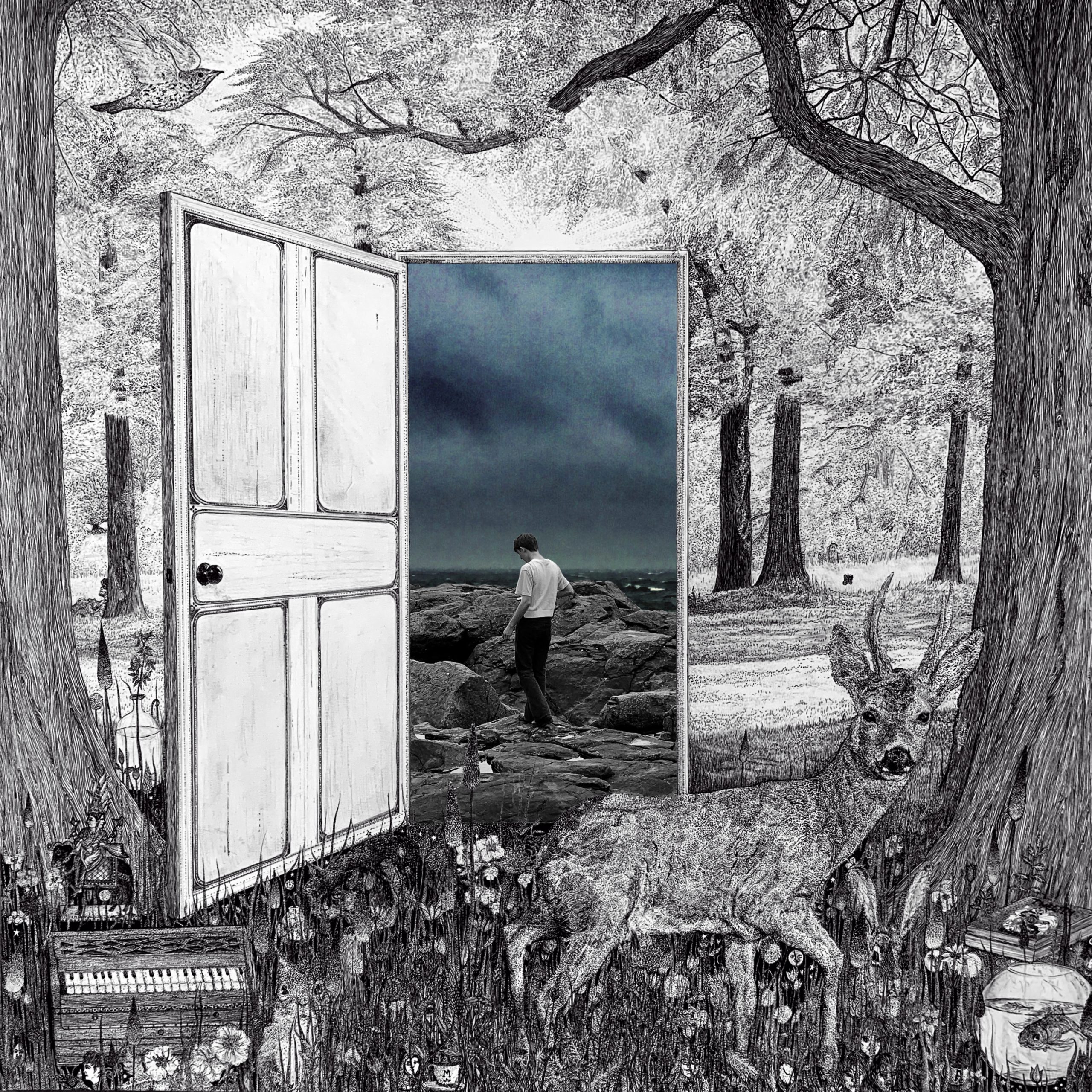
Yeah, it is very romantic. I think I’ve always been a big romantic. And when I draw stuff as well, like the Lover’s Leap album cover, it tends to be very intricate stuff. It’s designed so that I can lose myself in it, where I can get to a point where I’m not, I’m not thinking about bigger picture. I’m so focused on detail that it just kind of unfurls around me. And then when I finish, I go, whoa, okay, that’s a complete thing.
And I think that’s what happened with a lot of my albums as well. Like, I worked from like a starting point, and I didn’t go from like A to B or A to Z. I went, sort of chose a random point and then burrowed out from it. That’s sort of how my albums start.
Now, when I first discovered your music in early 2020, it was with the album Devotion that had been released in late 2019. And that was the first one on which you opted to use your own name instead of As I Recall It. So what did, what precipitated that change?
I think it was, well… the main fact of, of As I Recall It not getting anywhere, really, outside of like, I think I only had like two big fans. One bloke was Frederick Moe, who liked avant garde German music, and he would buy whatever I put out. And there was another bloke called LobsterPear Johnzon, who bought my entire recorded catalog for £30, because I put a 90% discount on it just to see if anyone would buy it. I do things like that. I think you’ve done that as well on my As I Recall it page. Thank you. Yeah. So it’s, you’re one of three. The, that is very obscure stuff. And it kind of remains that way. I haven’t tried to keep it a secret though, like I, I’m not embarrassed by any of the really squeaky stuff or the juvenilia. I like it, it’s good.
But yeah, I felt like once I had actual string players on my record and I had like a pretty tight thematic set of songs, as I did with Devotion, I thought, well, I think as well I have a lot of hubris. When I finished Devotion, I thought—I was only 18—so I was like, this is the best thing I’ve ever done. Alex Pester, this is, this is the start of it. This is where it all begins. Very much a line in the sand. I feel like my music has kind of followed on from that really, ever since as well. Hasn’t really gone back to what it was doing before that.
I agree as one of the Elite Three who’ve purchased your back catalog and listened to it, I, I really detect a marked change around… I mean, you were releasing an awful lot of stuff between 2017 and 2018, and I don’t know if some of it was recorded prior to that, but really kind of around the 2018 stuff I detect a shift, a real kind of growth in the quality. And I detect it again at Devotion.
Yeah, like, well I mean, I guess in 2018, there’s like two records I put out in 2018 that there’s a really big difference, I feel, looking back between, like, Paper Moon, early 2018 when I’m 16, and Jane and the Dancing Bear, which is like May 2018. I think everything from Jane onwards, starts to get really like a bit more confident, but it’s still very much like experimenting with style. Then by the time I get to Songs of Love and Hats, which is just sort of this big thrown-together, sort of “’ave it!” kind of thing, I think that was when I started to hone my craft as a folk writer, really.
Before we talk about the new album, I would like to go back a little bit to Better Days, which was released last year, and it was the first album that you released in partnership with a label, Violette, and the first to receive a physical pressing. So how did that relationship come about?

So when I got the editorial spot for Lover’s Leap on Bandcamp’s front page, I got a load of people from labels, just saying you know, “Like the record! Would you consider us?” and all that. But the first one, literally the first one that I got was, was from Violette, and it was Pascal, who is sort of… Pascal is a very mysterious man, really, because he’s got multiple titles. He’s like the graphic designer. He is also the entire French presence of the label. He’s, yeah, he’s like half the label really. And he basically just said, look, next time you’re in Paris, I’ll take you to lunch, and just try and convince you why you should release your next record with us.
He was very keen to stress that it wasn’t a signing. I mean, their whole thing is that they don’t really do contracts, so you’re not really bound to anything, which I really liked from the get go. As an artist, you never really want to sign things if you don’t have to. The double-edged sword of that is that obviously, if there’s no real investment on their part, monetarily, then it’s not going to get much bigger than it already is. And, you’re not really doing much for them either. They’re kind of just helping you out. It’s a springboard sort of situation. So I’m in a position now where I’m kind of label shopping again, which is, not something I’ve missed.
So it sounds like it was a, that the partnership wasn’t necessarily stressful? Because I could imagine that if you were accustomed to working on your own with not really any accountability to anyone other than yourself, once you’re suddenly working with a label, there are other concerns and other opinions. Did that come into play?
Not at all with Better Days, but, I’ve got an unreleased album, so I’ve got an album that’s coming out on the sixth of September, and I’m still umming and ahing whether to do it physically because it is a financial investment on my part. It’s just a matter of this current album that’s coming out next week is sort of me testing the waters with material that is a bit more low-key, just to see if a smaller pressing one, uh, run is worth it and can work.
But yeah, we only had a few disagreements with that unreleased record, just to do with, like, album art or, like, direction, or how to promote it, really. But I mean the, the uh, it was a really, really good partnership. And the touring as well was really great, like going to France and driving around in a mini and playing, you know, these backyards where every person is a journalist is pretty crazy.
And was that the first time that you’ve ever toured as an artist?
Yeah, first time I’ve ever toured as an artist, and it’s in a different country with, the person I toured with is my friend Sarah and she, she hadn’t played live in front of anyone in eight years, so she had kind of told herself that she’d never play live again. So it was kind of like a baptism of fire. But fortunately, it was only like three gigs. I mean, I call it a tour, but by my standards it is a tour, it’s exhausting. But, just just three dates.
Was Sarah also an artist on the label, or was she accompanying you?
Sarah was accom— well, Sarah was driving me, first and foremost. And I was paying her to do that. She is an incredibly talented multi-instrumentalist, and songwriter and arranger of pieces. Her work is kind of like, glitchy and micro-montage based stuff. So very different to what I do. But yeah, I’ll be doing touring with her in the future where she’ll actually have a bit more to do, because it was a very last minute thing of sort of Oh shit, I’ve got these dates in France, I don’t know how I’m going to get there.
How did you find it? And because I know that you, your concentration has always been on the recordings themselves and not so much on live performance. So how did you find the…
Yeah, I’m not such a fan of giving live performance, or even publicly promoting my work is not really something I do a great deal of either. Yeah. It was, it was weird. It took a lot of convincing to sort of believe that people were actually there to see me, for one. Going to a small city just outside of Lille. Oh, sorry, a small town just outside of Lille. Going into this big cultural center, ’cause the French actually invest in the arts. I mean, wow, I mean, that’s the first—mind blown. It’s like, wow, imagine living in a place where the arts aren’t crippled by the government. And then going into these sort of like 300, 400 capacity venues and everyone’s there like, and you’ve got this beautiful, like, grand piano better than anything you’ve ever played at. And everyone’s just so quiet. Yeah, it was brilliant. I mean, I speak a little bit of French, but not enough to, to know if anyone said anything bad. So I think it went well.
Did it require much rejiggering of the arrangements of your songs, in order to present them in the way you wanted to?
Yeah, a fair amount. I had, I have to split my setlists in half. So like I’ll do like a fully acoustic set and then I’ll do a few songs with an accompanist, which is, when I was touring Better Days in the UK, I did a few gigs in like Liverpool and places like that. And I did that with a trumpeter. So, the trumpeter who was on the record, Joey Fletcher. That was, that was a lot of fun. I have to sort of scale back a lot of the songs. So it’s kind of, you kind of live and die by the strength of your songwriting a bit. It’s, every track that you choose has to be structurally very tight. Otherwise you’ll lose the audience.
And every note has to be there for a reason.
Yeah, exactly. But I like minimalism, which is a funny thing for me to say, because I feel like all of my compositions start off very minimalist, by the time I’m done with them they’re not so minimalist.
Well, you’ve described the new album to me as a bit more raw and, immediate and minimalist than your previous work. What was the reason for that?
Budget. No, it was because I realized I’d never really done an album that was purely about, like, the songwriting of it, and I, I mean, one of my favorite records is Pink Moon by Nick Drake. And I’ve been listening to a lot of Adrianne Lenker as well, so. And obviously Phil, the Microphones. The release strategy of, of this new album is very much inspired by, the Microphones did a record called, uh, Little Bird Flies into Big Black Cloud and it’s this sort of self-released little edition of 400 LPs where every album cover is unique, and the tracklisting is written differently on every single copy. So no one really knows what anything is. Properly mysterious stuff. Real collectors item. That’s what I wanted to go for with this. Give people something to engage, engage with actively, give everyone a little bit of history, I guess in my own egotistical way.
So, I’m curious what you’ve learned. Because this will be the first release in which you were entirely responsible for the manufacturing. So I’m, I’d love to hear what you’ve learned in the process of making this record.
Well I’ve learned that leads in time for manufacturing vinyl records takes a long time. and I underestimated that sort of thing. So I have put on the Bandcamp that I think orders ship out a month after the album comes out. But you know what, you know, if Captured Tracks can get away with that kind of stuff, I can. It’s just me. I’m going to have to buy a lot of mailers and stiffeners as well. But I mean, aside from that, the cost of India ink is not very great. And I want to give my fans something personal.
I think that’s what the album is. It’s, some of those tracks are actually recorded originally on my iPhone, and they were just sort of polished up, and I recorded on top of them in the most, like, immediate way possible. Sometimes I, there’s bits where I recorded through the laptop microphone. There’s bits where I just sort of plug the mic in and just let it kind of just fall wherever it did and use the space in the room to create a strange sort of proximity. So it’s very, it’s just very thrown together. Parts of it are quite meticulous, I will admit. Like “Indecisive Me” was pieced together. And, um, second to last track, “I Love You”, is very much pieced together as well, but most of it is very organic and kind of haphazard and full of mistakes and you can hear me breathe. I like that sort of stuff.
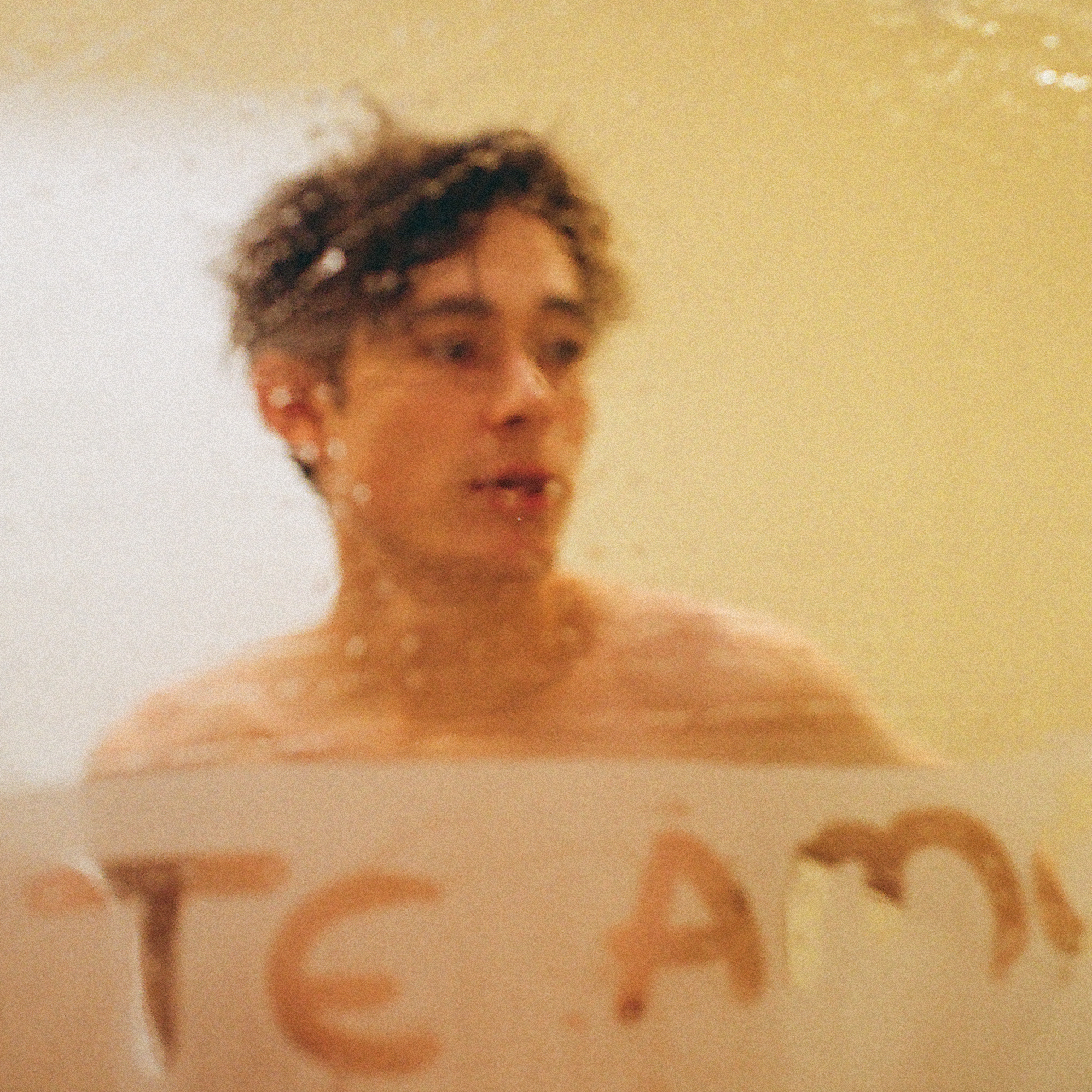
From your perspective it might be haphazard, but from my perspective, I think it contains some of your most memorable tunes and guitar playing. I can imagine a couple of songs on there, “Annabelle” and “Sorrow” in particular, as songs that other guitar players might, it might cause them to pick up their guitar and want to figure out how to play that. I think you’re, you’re really honing your craft as a guitar player.
Yeah, I mean, that was the big part of this record, I think was, falling back in love with playing guitar again, ‘cause with Better Days I knew half the album was composed on piano. And the, a lot of the arrangements were sort of specifically designed for strings and all of that. And you do kind of, you lose the… If you’re connecting the space with strings in arrangement, it means that your guitar playing doesn’t have to do as much.
But because I’m relying on purely my songwriting and my playing on this record, it’s, I had to find ways of weaving the melody in, and it made me a much better guitarist for that. I mean, “Annabelle” is like a very tenderly put together thing. It’s actually about my friend Ellena who recently passed away, so it sort of has a different meaning to it now, but, I mean, it’s just a song about, like, meeting up and painting with someone. It’s exactly what it says on the tin. So a much more direct way of writing for me, not something I’ve really done before.
You mentioned that Ellena was sort of a big part of the album or presence in the making of the album. Can you tell me more about her?
Yeah, well, I mean, I was planning on having her art be featured on the record that’s going to come out in September. Well, I mean, I just went through so many revisions with what I was happy with that it got to a point that the overall esthetic of the record had changed by the time we got there. And she just sort of said to me, look, I don’t know if what I’m doing here is actually serving the record, so she’s kind of wrote herself out of it a little bit. I guess I also just kind of got too involved with the project as well. So with this release here, it’s sort of like a, I don’t know, it’s kind of like a bittersweet kind of feeling about sort of wanting to do something with your friend, but things just kind of falling through for one reason or another.
And in a social media post, you described the new record as songs about important people and hard lessons. Can you tell me more about that?
I mean, I’ve gone through a lot of personal change in the last six months, really. Especially living in this place, which I’m moving out of in the next few months. I have left a relationship, been single for the first time in years. And in that four month period, I developed lots of close friendships with people, rekindled friendships, pissed a few people off, pissed myself off, learned things, left a label, retrained, you know, all those young adult things were done in within the space of about four months, really. And now I’m at a place where I’m a little bit more settled. So it’s, yeah, it’s a pretty transformative time.
I can tell as a listener because the, between Lover’s Leap, which was self-released in 2021 and Better Days, there’s a marked shift in the nature of the songwriting. Uh, on Better Days, some of the, what, the naivete, I suppose, has dropped away and everything is a bit more raw and emotionally honest.
Yeah, I think that’s just where I’m going as a person. I think it’s, it’s interesting for me as well, listening back to these records, because I can kind of chart emotional growth as I go through the records. Lover’s Leap was like a very stable kind of thing where I could be whimsical and I had like kind of another year of uni to kind of delay being an adult. So it’s very much sort of selfishly burrowing into recording as a process. And I think, I guess the breakup of that relationship… so I was with Maisie through Devotion, Seasons and Lover’s Leap, then that relationship breaking up absolutely just kind of changed the way I wrote in a lot of ways, because Better Days is a complete reaction to that.
It’s a funny one, my projects are taking a lot, have been taking a lot longer. And then this one, just came really, really fast. I think I felt like I had to get something out. We’ll just release something for my own mental health just to get something out there. Yeah, I think I’ve always channeled things in albums or release cycles or, yeah.
I want to come back to you mentioned writing on the piano. I read in another interview that “Big Black Second-Hand Book” on the album Better Days was one that was written on piano, which it sounds like that was unusual for you at the time. And I’m curious to know, what has learning to write on the piano changed about your approach to songwriting?
It makes you view harmony in a different way because it’s so much more visual. It’s, like, all laid out in front of you. And I feel like I can create closer harmony with piano, like so many of the chords on, like, “Big Black Second-Hand Book”, all of Better Days really is like, it’s very sort of like Debussy, kind of like cluster chords and things like that. They’re very, like, close together.
There’s an ambiguity in those chords.
Yeah. Very true. Whereas I think it, where there was piano before in my music like Lover’s Leap it was mainly, mainly just to augment guitar. So it’s just sort of another, you know, another part of the painting really. But with Better Days I actually learned how to actually write, as a working songwriter as well, because it didn’t come easily. I mean, there’s only ten tracks on that thing and one of them is an instrumental. And that record took about two years.
Which is an extraordinarily long time for you.
Yeah, yeah. And a lot of that material I kept on, it’s really funny because I kept on writing, like, a track that would be on Better Days. And then like the next week, I’d go into the studio and I’d record like, this, really, like, frantic, like, indie noise piece. And I’d be like, okay, right, let’s try and work out an album here. And then I realized, oh crap, this is not an album. So a lot of the actual form of Better Days came together really last minute. I had about seven out of ten tracks and then I think the la— like, I think “Restless”, “Bye Bye, Teddy”, and “You’re My Kind” came together within a month. They were written and recorded, so yeah, it was a funny, funny recording process.
Does your songwriting have anything akin to a process, or does it just happen when it happens?
I think I’m like a magpie really. If I’m attracted to the chords I’m playing, I’ll write the song. I’ll finish it. If there’s any sense of these chords are boring me, then I won’t. Melody’s quite easy for me. It’s just about getting the right chords and getting the right feel. That being said, I’ve had that before where I’ve, everything that’s been right structurally and then I’ve gone to record it and it’s been an absolute nightmare. “Are You Gonna Make Her Choose?” was really difficult. The string arrangement… I can’t, I’m umming and ahing whether, like, it should have the string arrangement at all. But then I realized that what it needed was, was a cello line just to sit underneath the entire thing.
There’s not much bass at all on Better Days, so there’s not much bass guitar. And I really love playing the bass guitar. It’s mostly due to the fact that the pianos I was recording on were slightly out of tune, and my cellist, who was my at this point ex-ex-girlfriend’s mum, is very, very patient and very, very talented. She’s played on far better records than mine. And she has an amazing like, sense of intonation so she can just tune to whatever I’m doing. But, yeah, I seem to have a knack for choosing out of tune instruments and basing entire compositions around them.
You, I believe, tend to work in a very solitary fashion in that regard. And you’ve told me in the past that when you’re creating string arrangements, it’s often on the fly. You are working with the string player, saying, perhaps humming or singing the part and saying, play this. Does that become difficult when it’s just you trying to work it all out? I guess I’m wondering, do you ever collaborate with anyone, or do you think that you would appreciate a producer who could help shape some of these ideas with you?
No, no. I’ll always do it myself. I think the string arrangement side of it, I’ve listened to enough, you know, good string arrangers that I can kind of piece things together. I think, also, I’m talking from a place of great privilege because I’ve worked with just the most patient classical musicians in the world. And I know from them that classical musicians aren’t usually that patient. Usually they require dots. So I have learned a little bit of stave notation, but I’m ungodly, and I’m, like, really, really slow. It just takes me so long to just wrap my head around sort of how many sharps there’s meant to be in whichever key I’m composing in.
And also, that’s one thing that every musician I’ve ever worked with has told me is that I am terrible at keeping in key. My songs are constantly shifting key. And they don’t really work in modes either—they just don’t really have much of a tonal center at all. Because I’m just a magpie, I just uh, Ooh, what a lovely chord, there we go. We’ll go there. It’s all, if I wasn’t relying on my instinct, I probably wasn’t, I probably wouldn’t be, my heart wouldn’t be in it.
And you did study music at university but it sounds like studying music hasn’t beaten that instinct out of you.
No, I mean, it’s given me enough knowledge to be able to teach music to people, I think. I could probably teach music to small children or garden creatures. But I can’t teach it to anyone who’s, you know, got a working sense of uh, of harmony. They would say, nah, nah, nah, nah, you don’t know what you’re doing.
You can’t do that.
Yeah, exactly. You can’t do that, that’s stupid. It doesn’t make any logical sense. I know a bit of, yeah, like, I know a fair amount of musical theory, but I purposely kind of curtailed that side of my development just because I could see myself getting a bit too into it. It gets to a point where you start to really love the sound of your own voice, and so I stopped.
So many of my favorite songwriters are people who actually consider themselves musical primitives. I’d say the vast majority of them don’t read or write music. And after decades of writing songs, they still have the thrill of discovery because they’ve retained that sense of being amateurs.
Yeah. I mean, I don’t feel any like when I start recording a song, I’m never thinking about the tracks that people have said they like or how well my last album did or anything like that. I just I’m always thinking about, like, coming at it from a place of, I’m 14 years old and I am playing with gear, and if a song comes out of it, that is magical. And it’s always magical whenever a song emerges, whether you’re recording a one-take wonder or you’re piecing something together over six months like I did with “Love on Our Shoulders”, it’s still magical, even when you absolutely hate it.
So I mix my music and I produce and master my music as well. And you can really learn to hate the music if you, if you’re listening for things all the time, like being a producer of your own stuff can make you hate your music because you’re always listening for, like, oh God, I wish I didn’t sing like this, like all these sibilances and, you know. You start listening for it and you’ll find an endless tapestry of mistakes. And then I learned to sort of start embracing them more. And I think that’s the big influence of Phil Elverum and his work with the Microphones and Mount Eerie, where it’s brilliantly produced stuff. I mean, he knows what he’s doing. It’s all recorded to tape. Very destructive process. So he’s always forcing himself to make decisions right there and then, no faffing. That’s what I really like.
As somebody who’s been writing songs for, what, at least ten years now, do you find yourself struggling with falling into familiar patterns? And how do you break out of that to keep things fresh for yourself? Do you ever use alternate tunings on the guitar?
Yeah. I mean this album is full of them, like, there’s about three different tunings on this record. This one slightly wonky approximation of Drop D, and then there’s this absolutely disgusting tuning that I use that is my dear, it’s the “Dear Friend” tuning. It’s D… D-G-D-D-A-E. Lots of D. Very chorused. So you just have to play these sort of nimble kind of… Ah, they’re kind of like sleety chords—they’re like in between, they’re runny, they’re not solid. There’s no body to any of them.
So yeah, it’s always like this sort of chromatic movement. It forces you to play a certain way. So that’s where “Annabelle” was written and, uh, I think “Sorrow” as well is written in that same tuning as well. And then “I Love You” I think is a, a variation on that tuning, but I think I might have put the A up to B. And then a few of them are in standard tuning, but with capos very high up the neck. I started doing that a bit more as well. Like using my guitar more like a mandolin or a ukulele.
I wanted to ask about “I Love You” because I feel like so many of your songs over the years, especially over the these last four albums, the ones that you’ve released under your own name, so many songs could have been titled “I Love You”. It’s, it’s a sentiment that is at the heart of so many of your songs, and I was curious as to why it finally emerged as a title on this new album.
I think it’s, it’s really funny because it’s not about anyone, which is which is the bit that’s actually significant about that one. It’s called “I Love You”, and it’s actually just about, the song is just about how I just fundamentally do just believe that love is a good thing. And even though sometimes it doesn’t go great, I’m never going to be put off, you know, being open to people. And yes. So it’s a love letter to love, really. And I wanted to create like a big, like a aural hug where all the sort of music just kind of builds. I mean, it’s, it’s really dynamic record, but it starts really, really quiet. It’s the quietest point on the entire album and it just goes [gestures upward].
So it sounds like when you’re writing, melody tends to come first for you. Do you struggle more with lyrics?
I don’t really consider myself as strong lyricist as I am a melodicist or a composer in general. I don’t know, I’ve always kind of treated lyrics as vaguely separate from music composition. I think it’s just because my big love is like Paul McCartney, and he’s an amazing lyricist, but he’s an amazing lyricist for what many people would say, all the wrong reasons. He’s not verbose. He’s not, you know, he’s he doesn’t really paint very detailed images. They’re always… and he’s not afraid of a cliche, and he’s not afraid of, you know, kind of cutting corners, actually. And I like that. He’s a workman. You know, he really works at his songs and he has these work songs where he just kind of gets through them and I like that. It’s much nicer for me to see an artist fail nobly than it is to see an artist kind of vex themselves over their own importance all the time. That’s why I love McCartney, because for every Press to Play there is a Ram, and for every, you know, Pipes of Peace there’s a Band on the Run, or whatever. And then when you listen to those records that you think you don’t like at all, you always find something that you like.
Yeah. Elvis Costello…
Yeah, Elvis Costello as well. I mean, you know, he’s taken a lot of risks and I love that approach to songwriting where’s it’s sort of and these are the artists that have a huge, they have huge bodies of work and you can really get lost in sort of what it all means and, you know, people come up with theories and stuff. But really, I mean, it’s, it’s songs for the sake of songs.
You show up and you do the work.
Yeah, exactly.
And that’s really the important thing. And that’s where the greatest work comes from, I think. it doesn’t necessarily come from genius striking from the blue.
I’m friends with far better songwriters than myself. But they’ve never released any of them because they’re perfectionists and they don’t want to put out their stuff. I’ve recorded a lot of people’s ideas and stuff. I said, hey, this, this recording is brilliant, it’s ready to go. Just put it out there, something good will happen. And they’re like, no, no, no, no, I need to go into such and such studio and I need, you know, a million people around me, and then it will be… And so I’m like, No, if your, if your song is right and if you feel ready, then don’t worry about what other people are going to be expecting of it. Just put it out. There’s no harm. I’ve always maintained that if you want to put something out, just put it out and not have any regrets about that. Make mistakes. You know, put together a half finished album. That’s character building.
And there really are no consequences. I mean, you’ve got so much music on Bandcamp, I venture to say there’s a lot of people who have a lot of music or Bandcamp that isn’t necessarily up to whatever standard. And yet, what’s the harm?
What’s the harm at all? And I just find it mad that people want to interview me. I’ve been lucky enough to be in magazines and stuff. I mean, that just is crazy to me. The fact that, like, physical media for music still exists is brilliant. And the fact that I sometimes feature in it as well is just positively surreal. And it doesn’t bug me too much that I never get into, like any of the UK stuff. So I think the, I don’t think the English really have much time of their own history anymore. Because maybe it’s a bit painful. They don’t want to revisit stuff from the 60s and 70s, not as much. It’s a funny one. They don’t like revivalism, not so much. I think they’re wary of it. The Americans seem to be more inclined towards nostalgia.
Unfortunately, yes.
Yeah, well, I mean, I don’t know, it’s probably a bit unfair of myself to call what I do revivalism because it’s not solely that. It’s not sort of, hey, old man, remember that thing you like? It’s just music that happens to be in an archaic style. I guess. I mean, I like the Lemon Twigs and they’ve had a lot of criticisms thrown their way for sounding too much like the Beach Boys or the Beatles, but I think their new record’s lovely, and I think that their last record was even better. We don’t have any Simon and Garfunkels, so why not?
I think I find myself wishing that (not that anyone asked), that Lemon twigs would perhaps do something a little bit more personal. Their chops are so good. They’re such good songwriters. I admit that I do find their style I suppose what I would call nostalgic, but I feel like they’ve, they’ve got the chops that they could write something that really very personally speaks their opinions of the world at this moment, which in my opinion, they’re not necessarily doing.
No, I mean, the latest record is beautifully put together, but it, they’re not, it’s not a personal record. I think the previous record is an album that does it a little bit in places. I mean, there’s still so much Chilton worship. I mean, sometimes I have to turn off and go, Why am I listening to this? Just put on Radio City, it’s way better. But like, there’s there’s some tracks off of Everything Harmony that are really personal. You can tell that them getting kicked off their label and Covid and all that really messed with them a little bit. Knocked their confidence, which is always a good thing. You know, I think it’s always a good thing when an artist has their confidence knocked. They tend to come back swinging.
But back to the LP. You mentioned that it was a bit surreal A) that they’re still making physical LPs and B) that you’re involved in some part of that. Was it, how did it feel holding your own album in your hands?
Crazy. Still does. I mean, I’ve signed every copy of it and doodled all over every every upside-down, misprinted inner sleeve of Better Days. I love the wonkiness of it all. And yeah, it’s mad to me that my record is in the collections of people I admire a lot and, and of people that I’ve never met and never will meet. It’s really wild to me. I’m so used to my music only having, like, a local at most, like, connection with people. And then, you know, to be conducting an interview five hours apart and to have… I mean, you pledged to buy the next album, you know, you’ve got a copy of Better Days. It must have been, how did it feel for you to see it? Because, I mean, did you, do you, did you expect me to have a physical release anytime soon? Because, you know, I didn’t really think it was on the cards when I started recording.
I suppose it didn’t matter to me. It wasn’t necessarily on my radar—”I would like Alex to have a physical album or work with a label”—because I see what you’re capable of on your own. And I buy an awful lot of music on Bandcamp that, that either there is no physical embodiment of or I’m simply at this point not interested in owning a physical copy of. I’m simply happy to support the artist and buy the download. But I did, when I got your album, make a social media post with a picture of the record and expressing pride. And I believe, as I said, I have no right to have a feeling of pride that Alex has released this LP and that he’s, he’s getting wider recognition than me buying his music on Bandcamp.
Well, I mean, that’s your your mission statement, though, isn’t it? Yeah. It’s not about discovering gems for the sake of lording it above other people, which I think a lot of people do which, in the music collector world, is kind of a thing, isn’t it. Sort of I’ve got this super rare thing, and you don’t. Ha ha ha, look at how smart I am. Hee hee hee! There’s only 20 copies in the world, and you don’t have it. Yeah. You’re, you’re, you’re not really, you’re more of like an archivist or like a sort of a scribe. Sort of a testament to music that has no written legacy yet. Like, there’s so many artists that kind of I only really know through sharing space on your, you know, Mixcloud. I think what you do is important.
Thank you. That means a lot. And you read me like a book. I am indeed an archivist at heart. In another life, I’d have, I’d work at the Library of Congress, uh, digitizing old media.
That sounds lush. I did my work experience at the North Devon Athenaeum, where I was just looking at microfiche all day. It’s good stuff.
And speaking of making connections in the broader world, at some point within the last year I unexpectedly saw you pop up in a promotional video by Cabane, Thomas from Belgium, who’s another one of my favorite artists. And so I’m dying to know more about how that connection happened and what sort of collaborations you two are working on.
Yeah. So he had, like, these, he does these, like, remix series things whenever he puts out an album, And he, I guess, you know, as you know a Cabane release is kind of quite a rare thing. Like, he’s only put out two records and there’s quite a bit of space between them. And, but he’s a proper self-releaser, I mean, that’s, the scale at which he does this stuff is mad to me. But yeah, he contacted me through Violette, and he did it mostly through Instagram, and he’s a kind of guy who’ll just send you, like, an audio message about all of his thoughts and he’s incredibly generous with his time as well. I mean, um I asked him for advice quite a fair bit. He’s wonderful.
But I met him in person when I was touring in Paris, and, he was just lovely and very self-effacing and probably too self-effacing, actually. I worried about him a little bit, because he didn’t seem to realize how quite good he is. But we went to a park and it was like, sort of early/mid-October, and it was still absolutely baking hot. And we set up like this little portable recorder and we did we did a version of “Melodies of Love” from his new album, Brulee, that he sings on the record with—well, no, he doesn’t sing—he plays on the record with Kate Stables and Sam Genders, other incredibly important people. So, yeah, I just sort of knelt down in this bamboo cave while these mosquitoes ate me alive, and tried my best at singing unlike Kate Stables, which was a lot of fun. I don’t think he could use it, though, ‘cause there’s just too much like mosquito noise!
So that was like the, that’s like the the grand summation of our collaboration so far. I know that he’s he’s planning on, I’m probably not dropping any spoilers here, but he’s planning on dropping like a, an album kind of similar to what I’m doing here—a very sort of impromptu, sort of spontaneous release, so, who knows, he might, I might be involved in that somehow. If I am, that’d be amazing.
And he’s, he’s part of a, what might I call a nebula of artists that I have such great admiration for, including the aforementioned Kate Stables. Yeah, she and perhaps he gravitate to really excellent, unusual artists. And I’m, I’m so glad to see that you two have found one another. And I just hope that fruitful things come from that.
I’m very honored to be mentioned in the same breath as all those people. Well, maybe not the same breath, but the same vague yawn. I’m like, I’m on the tail end of it. Like, yeah, ’cause like Sean O’Hagan, like, High Llamas. Those records are incredible. And all the Stereolab connections as well. I like it. I mean, so I can namedrop to my parents and they actually know some of those people, so they’ll be like, Okay, you are getting somewhere! That’s good!
As someone in their mid-50s who grew up with a very different music industry than the one that exists now, it’s very easy for me and my peers and people who’ve seen the evolution of it to decry the state of it now. I’m curious, as someone who came of musical age, making music in a different paradigm, is there anything about the current musical industry that you’re excited about?
Oh, I feel, I feel like hip hop has been in a golden age for a long time. Well, maybe not golden age, but some kind of strange phosphorescent green craziness age. Uh, all this experimental hip hop is popping up, there’s some amazing stuff going on like production ideas. I mean, it may seem kind of totally incongruent with what I make as an artist but Tyler, the Creator was a big influence on the production for parts of Lover’s Leap, which is crazy, I guess thinking about that now. But like Igor’s like, just the the way he approached like kick drums, and like where he’s sort of like, like smash-cut editing and stuff like that. I guess, I mean that as well is like a very Van Dyke Parks modular, Wilson-esque thing to do as well, to just sort of like go suddenly like, bam!
But I feel like that’s something that all this really abstract, like hip hop artists like Billy Woods and people like that really understand is like contrast. And, um, it’s really great to see, like, on like the online music sites as well that, for example, hip hop is it’s stopped being referred to generally as like, oh, that’s just rap. No, it’s drumless or it’s like ambient or it’s, you know, hypnagogic pop, all these terms. I like that kind of stuff. I mean, genre is a tricky thing because if you get too bogged down in it, you start tailoring it to really niche and stupidly specific corners of the internet. And I’m not about that. But that is kind of useful.
And it’s nice to see that people are treating what is coming out now as vital and, and important and innovative. But I feel like all the innovation is going on in hip hop. I mean, there’s not much folk innovation going on. It’s not like Adrianne Lenker reinvate, reinvents the wheel or anything. Perhaps how bold they are when it comes to singing about gender and sex is its own revolution. But I don’t think that’s the point of what they make. They’re very much a songwriter’s songwriter. What they’re doing has more to do with, more to do with Bob Dylan than, you know, The Raincoats.
And I certainly feel like you have made the most of the current digital ecosystem. You have been posting your music on Bandcamp with no other intermediaries for a decade now, and now you’re self-releasing physical LPs as well. So it sounds like this era has really enabled you to do what you want to do in your own time.
Yeah. I mean, it’s a shame that Bandcamp has kind of gone a little bit downhill because it’s been brought by the Fortnite people. That was always going to happen, you know, big buyout, takeovers, staff getting laid off. It’s capitalism, can’t do anything about that, unfortunately. But it is good that there is just even that option. It’s it’s sad, really. I mean, so much of being optimistic as a musician is, is an exercise in begging for scraps, really. We’ve been dealt such a raw hand, I feel. But like, it is so much easier than ever to just put stuff out. It’s harder than ever to get people to care. I think that’s the other end of it. But people do want to connect, and people out there do want to care deeply about things, and that’s never going to change.
Your next album after this one sounds like it was already recorded in full, and it’s due out in September?
Yeah. So my record label is called Stripey Jumper Records because I used to wear the same stripey jumper whenever I’d record as a kid. And I think Lover’s Leap is technically on Stripey Jumper. But yes, the catalog number for this new one is SJR-002, and then for the next one it’s going to be SJR-001. So that should give you some indication of what I was initially planning on doing. Yeah, I just kind of rushed release this, this one. I just thought, why not? Get it out there. Very spontaneous.
I want to thank you so much for spending your time with me today.
Thanks very much, Mark.
You can find Alex Pester’s new album I Won’t Give Up on You on Bandcamp, Spotify and other streaming services, and follow him on Instagram @alex.pester.

1 thought on “Interview: Alex Pester’s I Won’t Give Up on You”